Side project · Working prototype
Leadership Loop: remembering what matters between 1:1s
A prototype I designed and built with AI, so managers carry context from one conversation to the next and keep their promises, in both directions.
The challenge
1:1s are where most management happens, and they’re surprisingly fragile.
What someone raised three weeks ago rarely makes it into today’s conversation. Managers lose track of their own promises, and when one slips, trust erodes quietly. Praise sits in Slack, goals in a document and progress in people’s heads.
Most tools focus on agendas or reviews. I wanted to explore memory and accountability in service of the conversation.
My role
A solo project, built with Claude Code, Next.js and Mobbin. I framed the problem, set the principles and wrote the requirements, including the rules for evidence, approval and wellbeing. I directed Claude to build it phase by phase, challenged every output, and turned gaps found in testing into rule changes. The AI wrote the code and first drafts; the direction and the decisions were mine.
How it works
A coaching workflow in Claude Code and a dashboard for the manager. Nothing changes anyone’s record without the manager’s approval.
Prepare
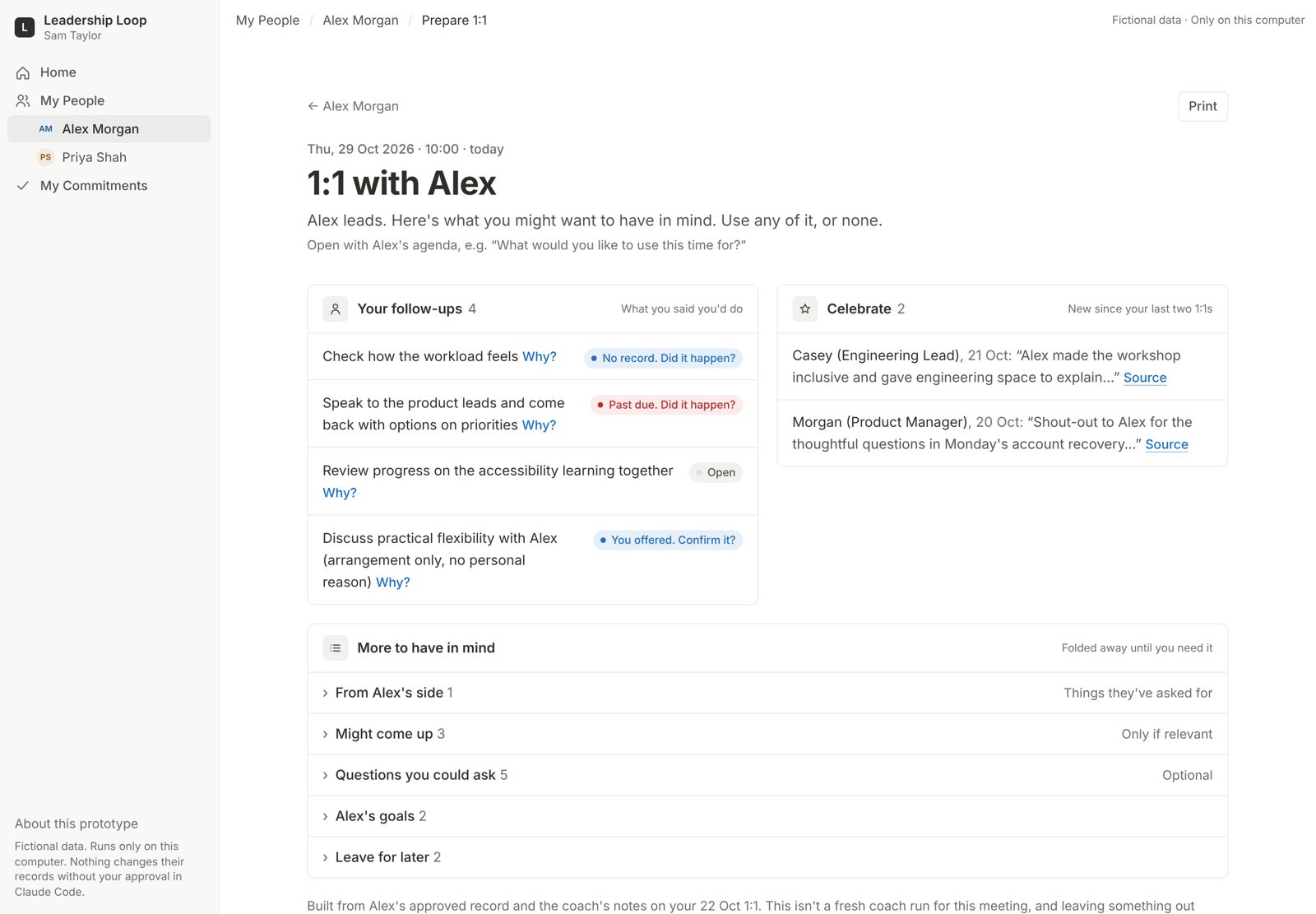
A short briefing, built only from what was already on record.
Reconcile
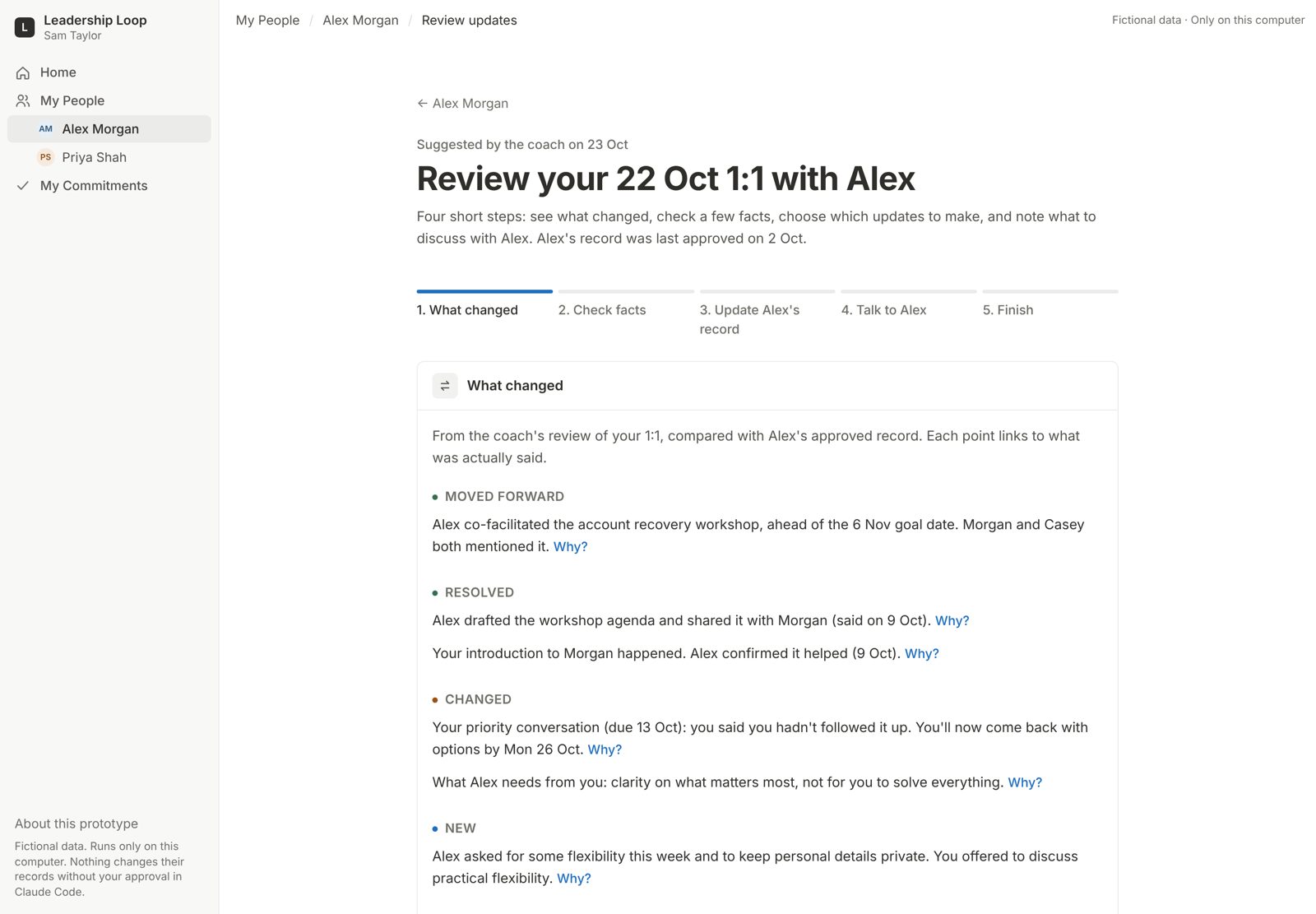
Compares the new transcript with the record.
Propose
Shows each change with the quote behind it.
Apply
Saves only the changes the manager approves.
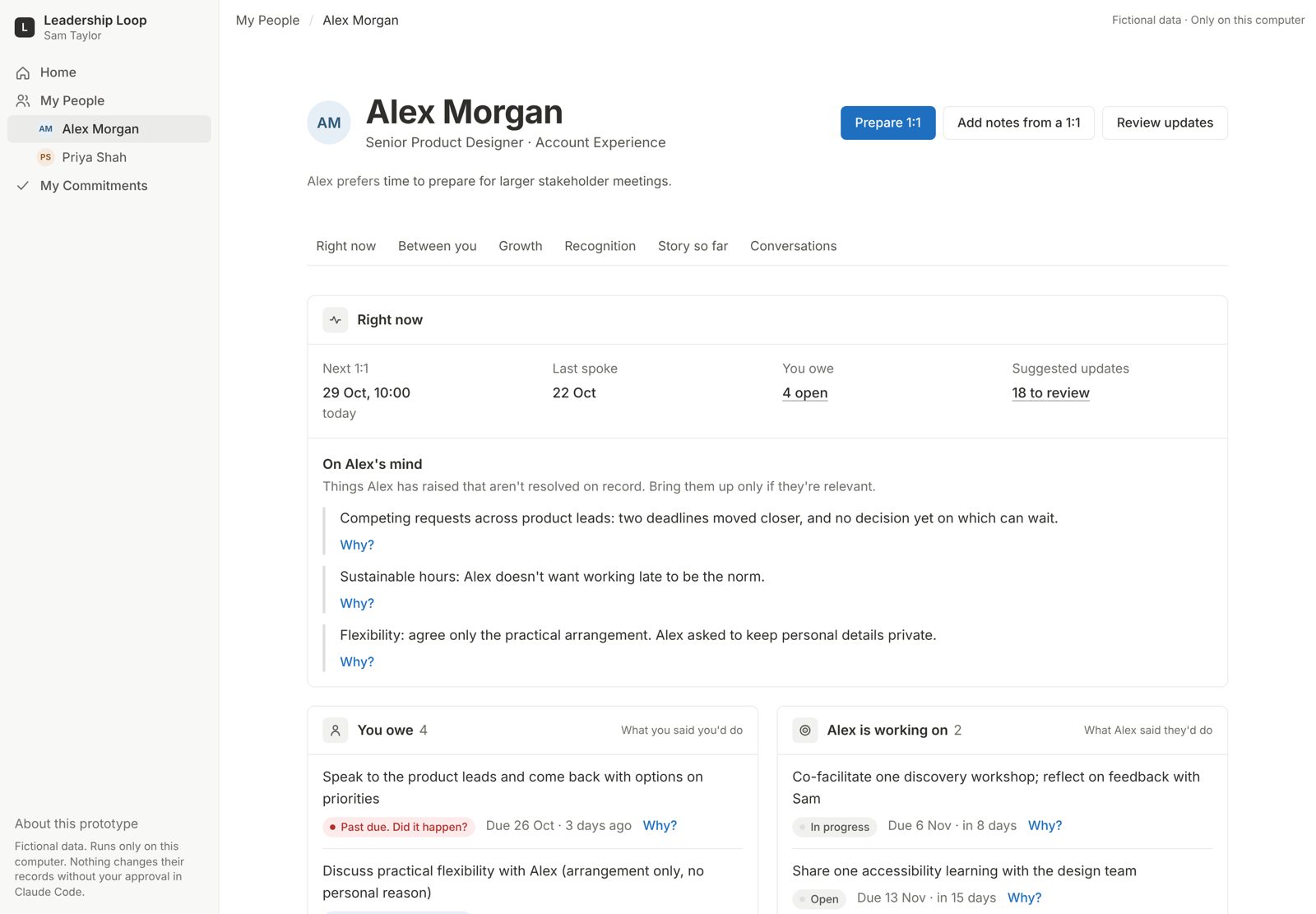
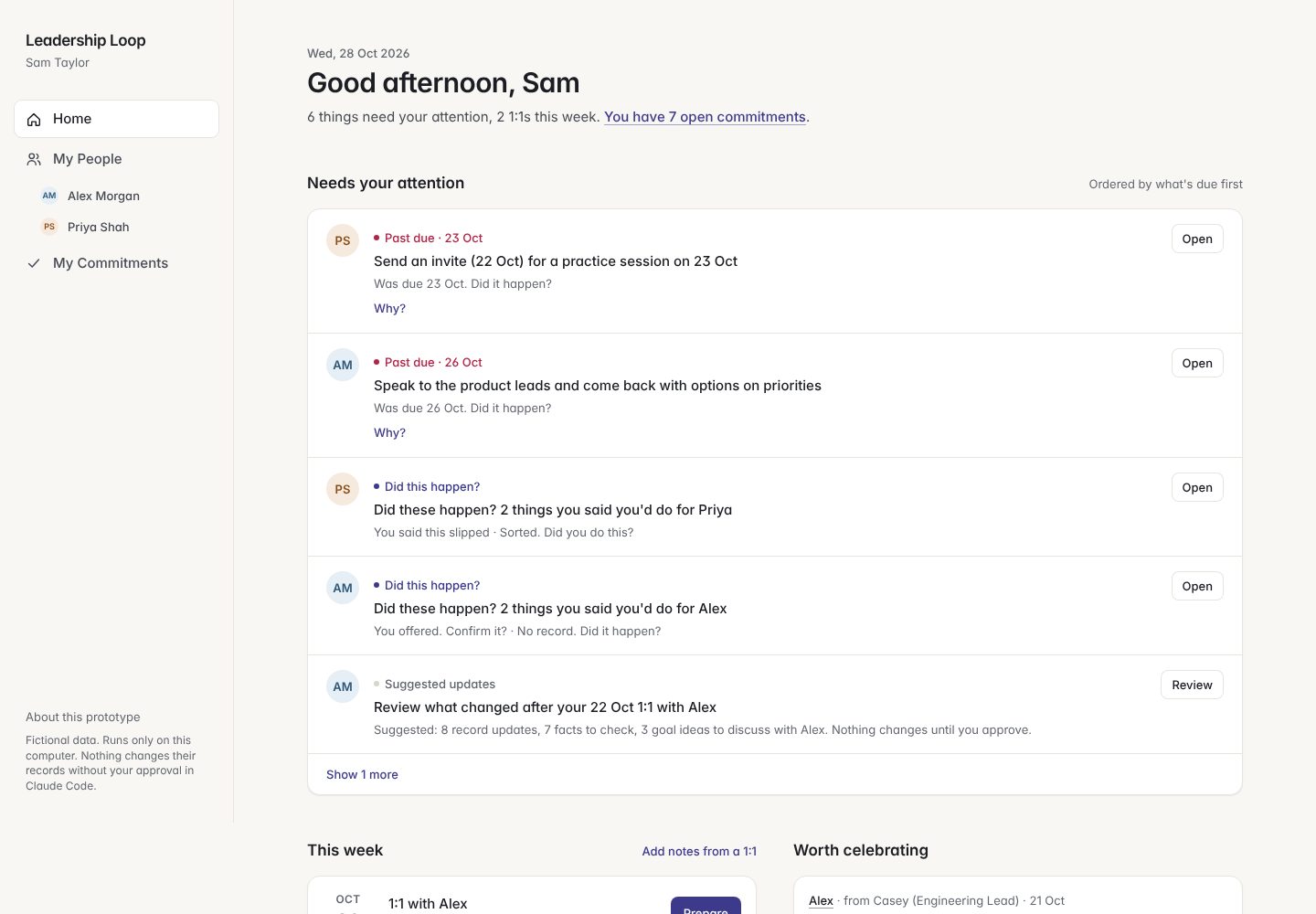
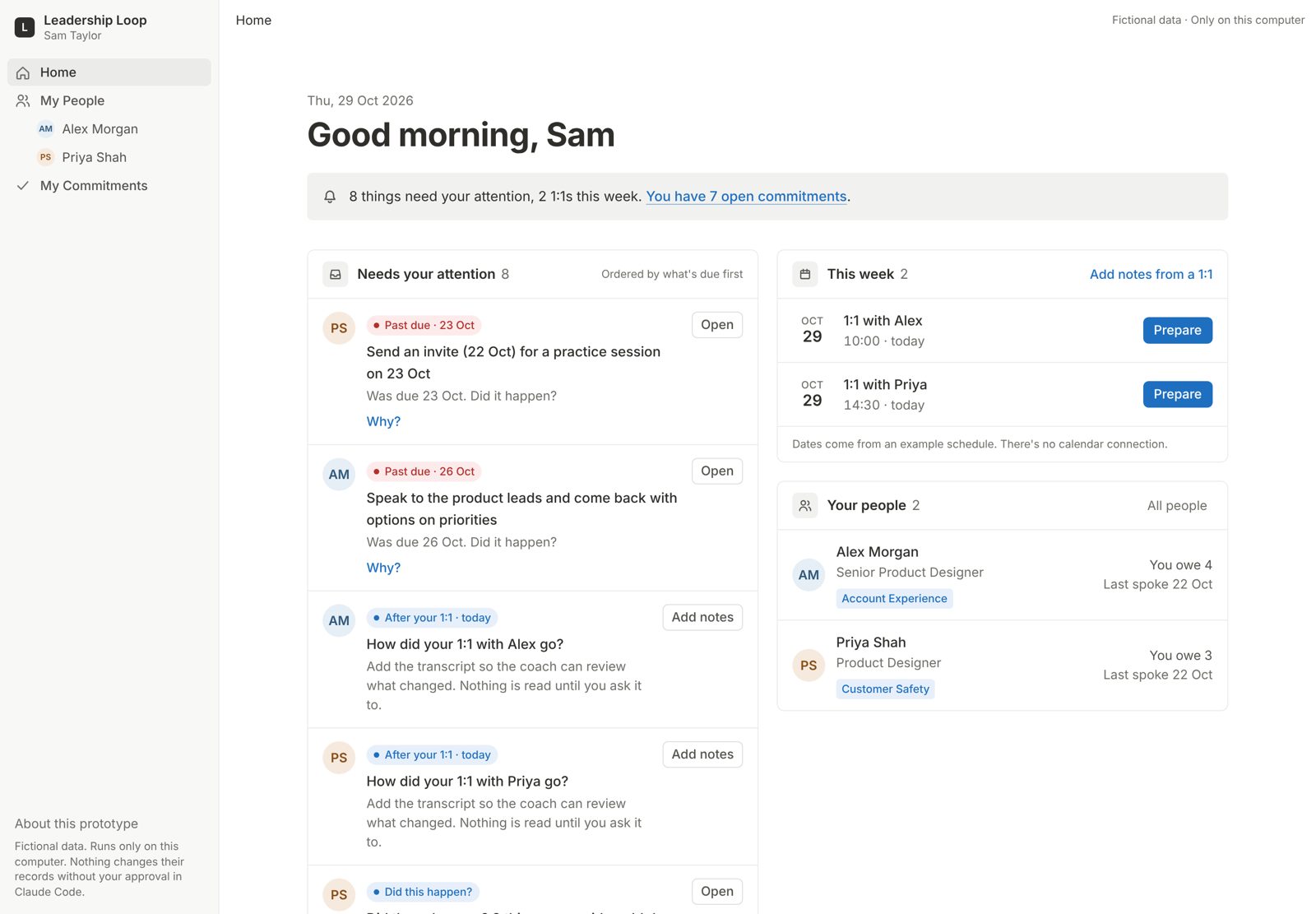
The working prototype
Principles I designed to
- Employee-led. The 1:1 belongs to the person; the tool is a memory aid, never an agenda.
- Coaching, not evaluating. No ratings, rankings or promotion calls.
- Trust through accuracy. Every point links to what was said.
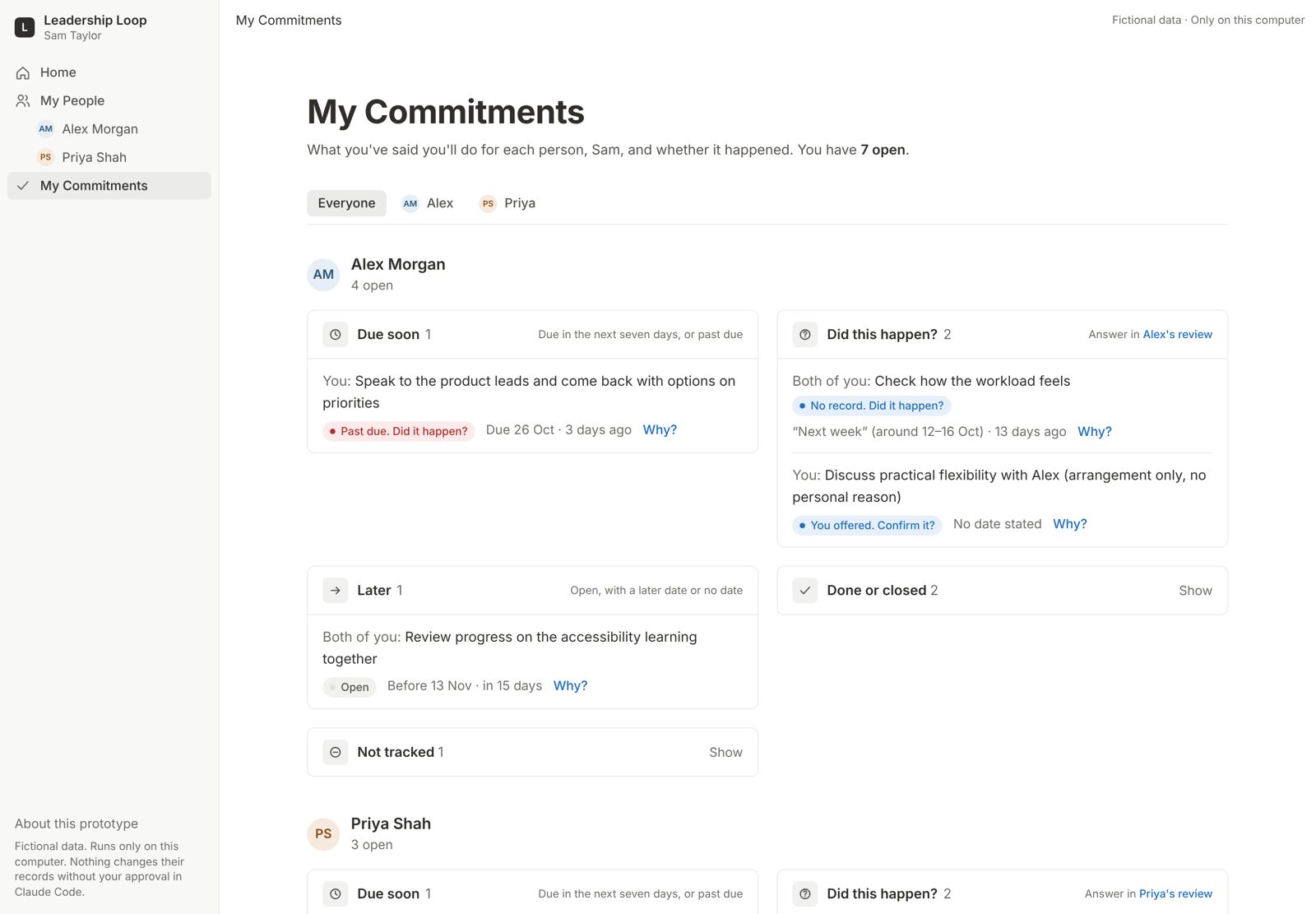
- Accountability both ways. The manager’s promises are tracked too, and shown first.
- Recognition as celebration, never as a score.
- Care with personal information. Only work points people choose to share, in their own words.
The approach
Fictional data first
A made-up team let me test sensitive moments safely, like a missed promise or a private flexibility request.
Test, then tighten the rules
A completeness check I added found four missing commitments where the first test found one.
Redesign around three questions
Who needs my attention? What do I need to remember? What do I do next? The 1:1 briefing went from 840 words to 214.
Learn from what’s live
I studied real screens from 15Five, Fellow, Lattice and others on Mobbin, then chose a direction from three options.
The redesign
The first version worked, but it looked generic and gave every section the same card. I compared three layouts drawn from real products, chose a panel grid, and restyled the whole app with a calmer, Notion-like feel.
Key decisions
Simplify rather than show everything
All the evidence stays, behind a “Why?” that shows the exact quote.
No automatic record updates
Until there’s sign-in and consent, changes only happen in a confirmed step.
Accountability without blame
Past-due promises ask “Did it happen?” rather than being marked as missed.
Privacy by leaving things out
Wellbeing details and personal reasons are never kept, and people are never ranked.
Next: a two-sided 1:1
If the 1:1 belongs to the person, they should see it too.
I took the best patterns from products already live and combined them with Leadership Loop’s principles: a catch-up before each 1:1, one shared page per relationship, a short check-in from the person, and a long-term view of goals and recognition. The new part is the person’s own dashboard, where they can hold their manager to account and correct what’s on their record.
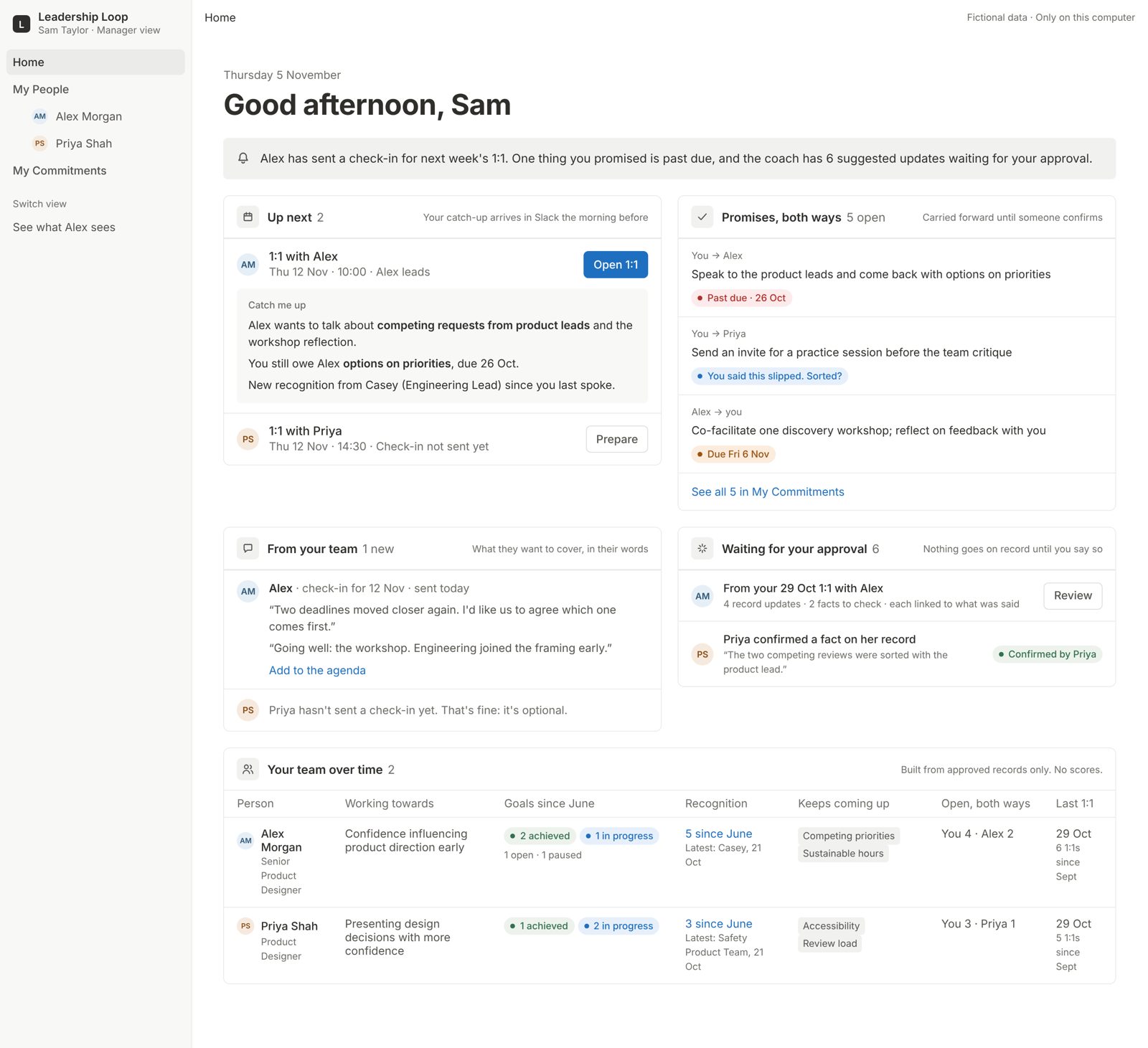
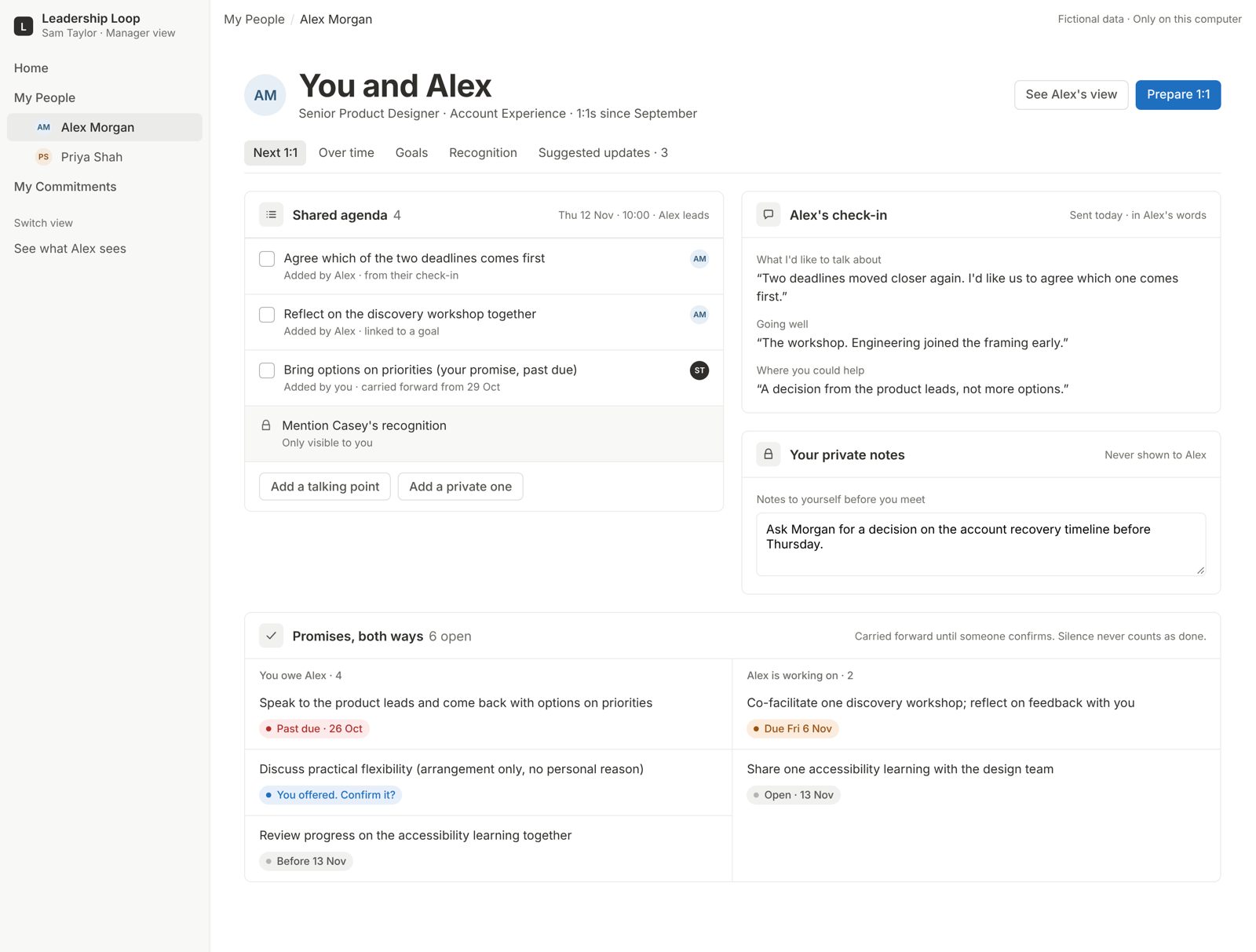
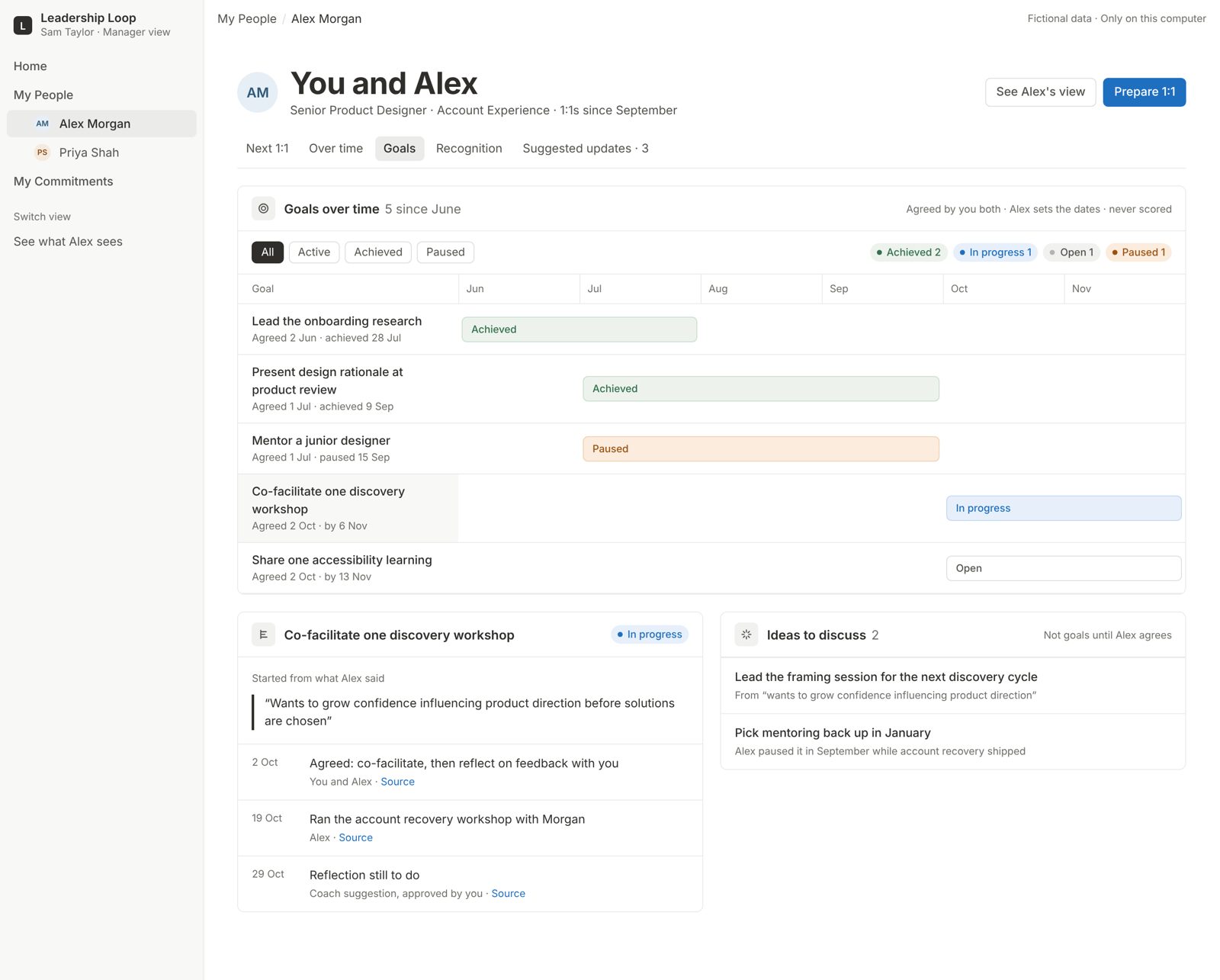
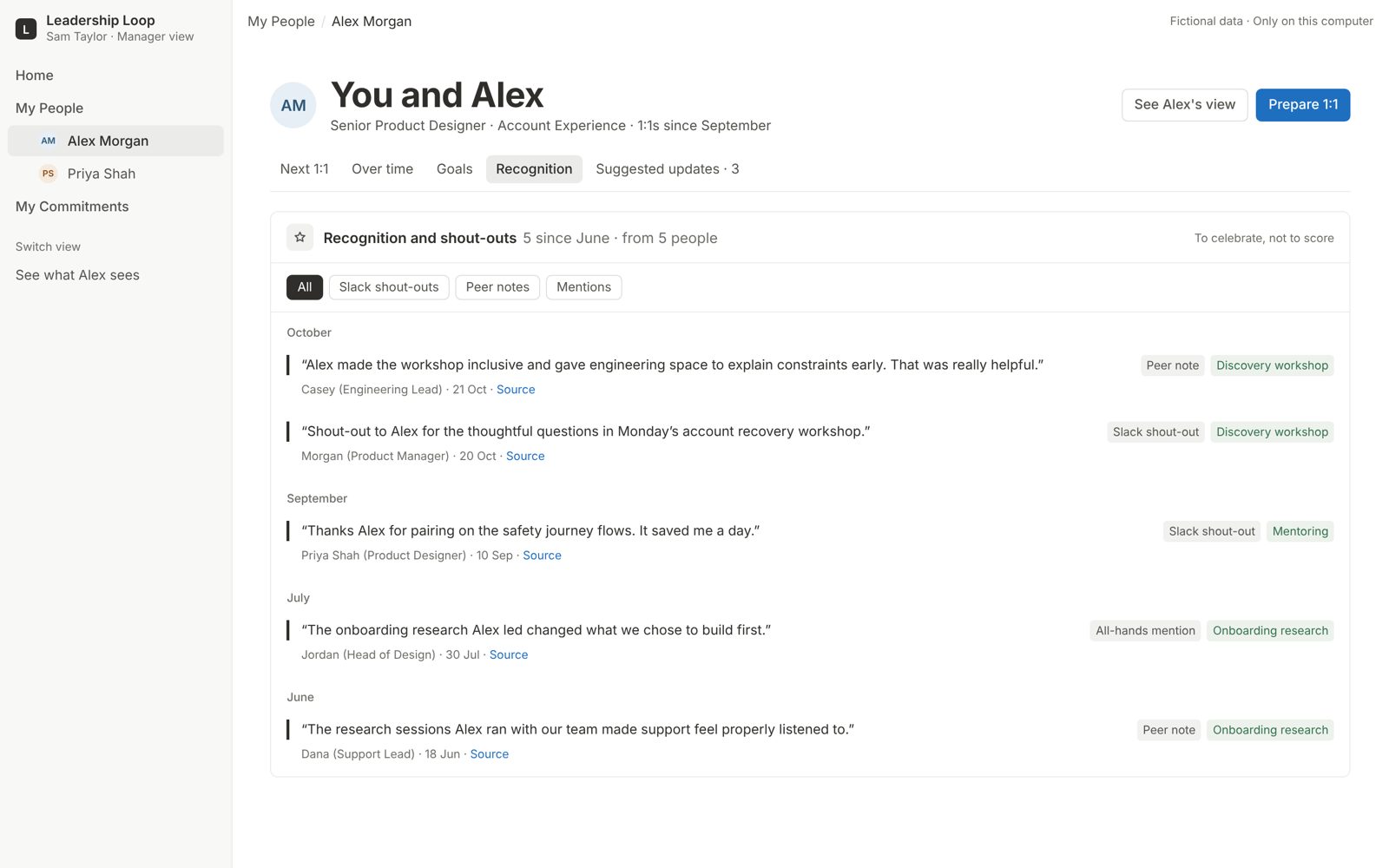
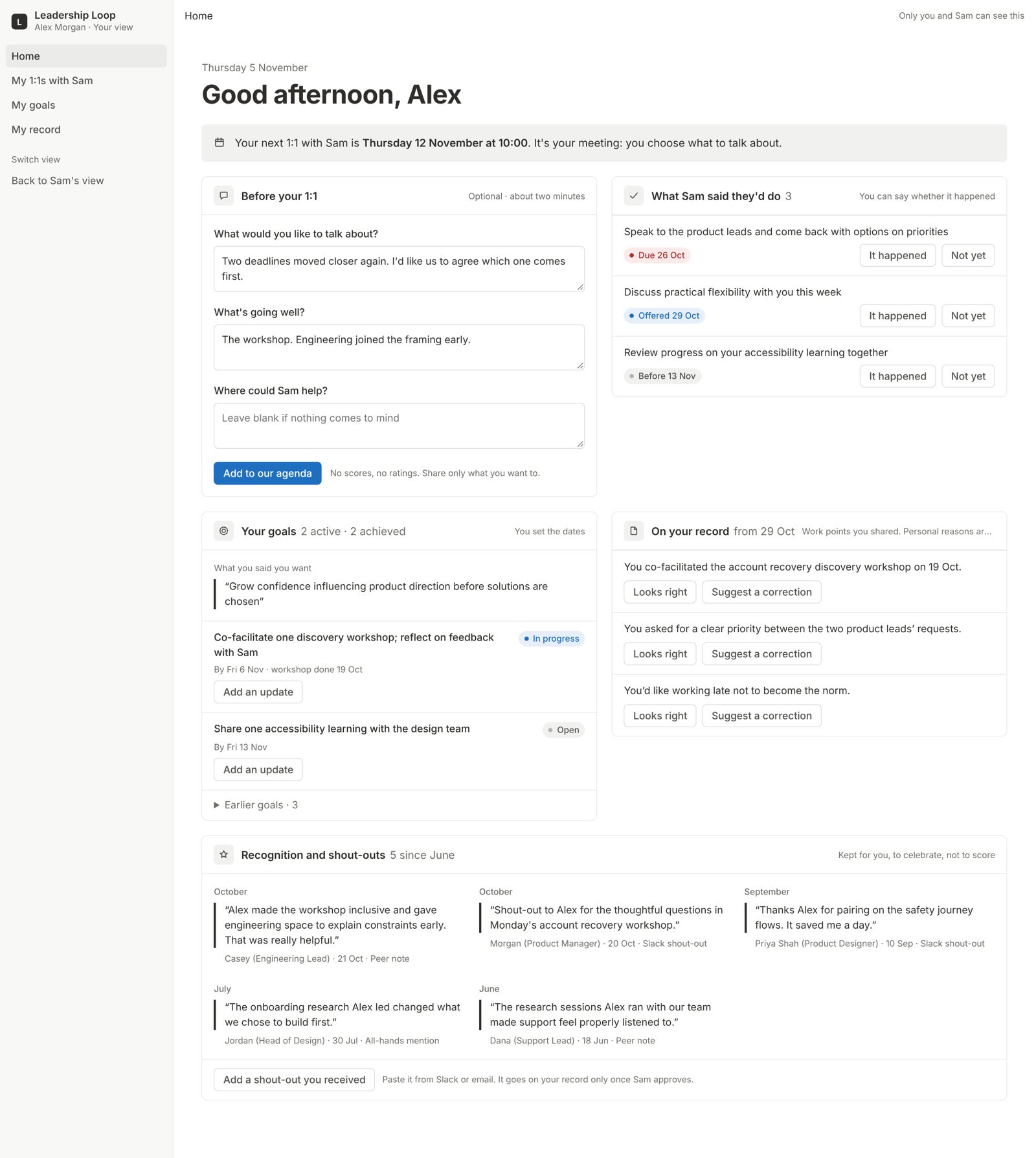
Concept screens. Patterns studied on Mobbin from 15Five, Fellow, Lattice, Topicflow, Windmill and Aboard. All people and content are fictional.
What I verified
- 0
- Automated accessibility issues across 41 page states.
- 223
- Cited quotes checked word for word against their sources.
- 53
- Protected records unchanged after every test.
No real managers have used it yet, so there’s no evidence of impact on 1:1s. That’s what I’d test next.
What I’d do next
Put it in front of real managers.
- Usability sessions with 5–8 people managers.
- Run the coaching workflow live as notes are added.
- Sign-in, consent and retention rules before any real data.
- Build the person’s side as a hosted app.